|
When we take the time to memorize a quote, we plant a seed in our minds that will grow to serve us for the rest of our lives.
So, this week, I started a small list of quotes in a Google doc, and added to it whenever I came across one I liked.
Then, throughout the day, I practiced remembering one of the quotes.
It was a good mental exercise, and I enjoyed the process.
Whenever I try one of these "experiments" I've begun running it by an AI to see what a super-human thinks.
And together, an AI and I came up with these benefits to studying quotes:
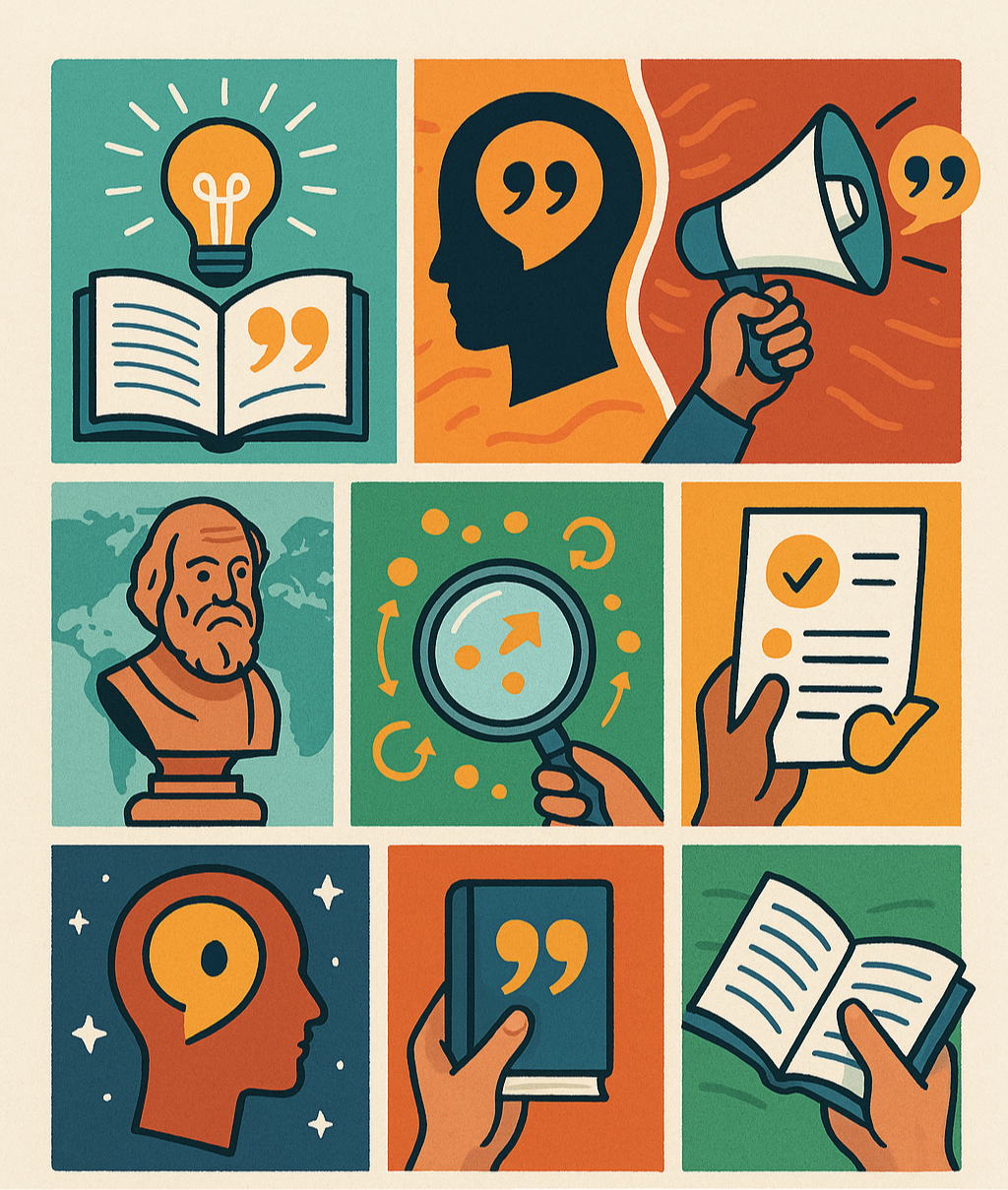
The 8 Benefits of Studying Quotes
- Compressed wisdom – You get decades of someone’s experience distilled into a single sentence. Efficiency at its peak.
- Mental reprogramming – Great quotes reshape how you think, often instantly. They’re like software patches for your brain.
- Linguistic weaponry – Knowing the right quote at the right time makes you persuasive, sharp, and memorable in conversation or writing.
- Historical continuity – You feel connected to the greatest thinkers, leaders, rebels, and creators across time. You’re not alone.
- Pattern recognition – As you read enough quotes, you start seeing recurring themes: resilience, action, humility, timing, etc. That repetition is insight.
- Better decision-making – Often a quote gives you the frame you need to break a deadlock or clarify your thinking.
- Memorability – Unlike long books, quotes stick. One line can live rent-free in your head for life — and guide action.
- Portable and non-linear – You don’t need a block of time. Open a random page, read one quote, and you’re done — and better for it.
|