📖 The Theory of Constraints

Happy Saturday!

This week I wanted to call your attention to a book worth knowing about.

Unlike typical business books, it's written as a novel, and follows a factory manager named Alex Rogo as he struggles to save his manufacturing plant from being closed down.

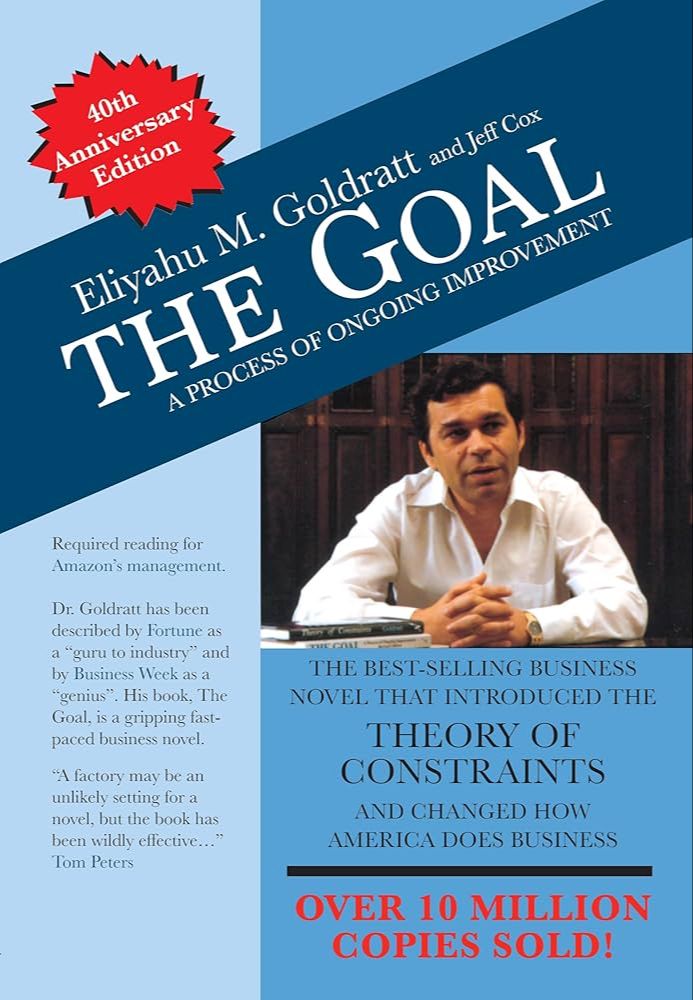
The Goal: A Process of Ongoing Improvement by Eliyahu Goldratt


At the heart of the book is what the author calls the Theory of Constraints (TOC).

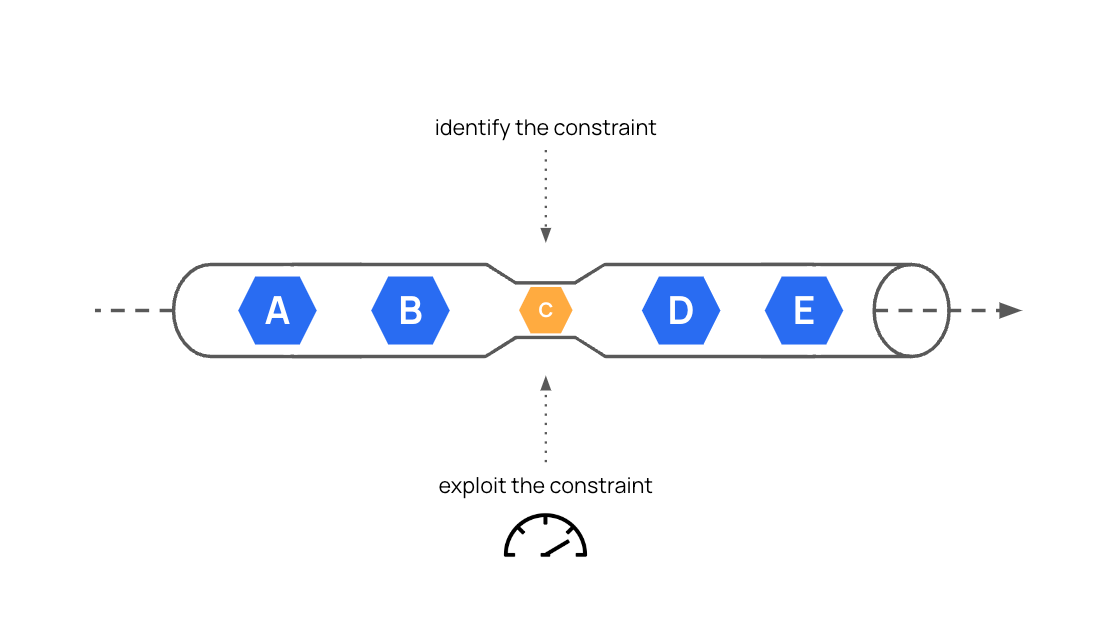
The central concept is that in any business or process, there is usually one key limiting factor – the bottleneck or constraint – that determines the output of the entire system​.

Improving anything that is not the constraint does little for the whole; to get big results, you must focus on identifying and managing the system’s weakest link​.


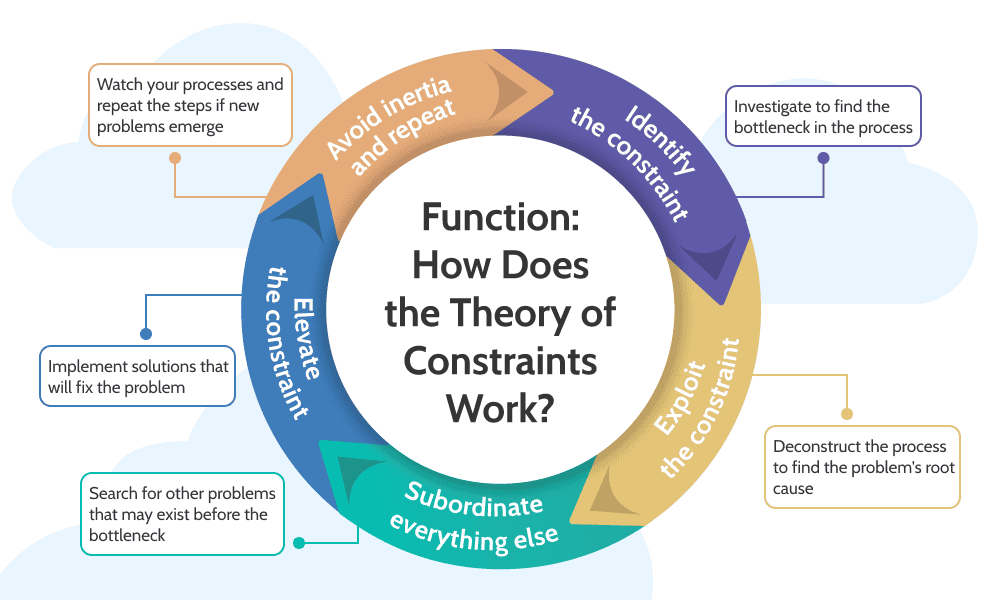
Goldratt (the author) presents a five-step process (the “Five Focusing Steps”) to apply the Theory of Constraints in any operation​:

  1. Identify the system’s constraint – find the one bottleneck or weakest link limiting output​.

  2. Exploit the constraint – make sure it is used to its fullest capacity (e.g. keep the bottleneck machine working at all times on priority tasks)​.

  3. Subordinate everything else to the constraint – align the entire process to support the maximum output of the constraint (other parts may have to slow down or change to avoid overproduction ahead of the bottleneck)​.

  4. Elevate the constraint – invest in increasing the capacity of the bottleneck (e.g. add another machine or find innovative ways to expand its output)​.

  5. Repeat - Once one constraint is broken, repeat the process for the next constraint – but beware of inertia; never stop looking for the next weakest link​.
     

This approach to systems thinking is extremely useful as a Salesforce professional.

One of the key reasons your company exists is to make money.

This is the goal.

Every process, procedure, task, action, or activity the people in your company do (or don't do) is "the system" talked about in the theory of constraints.

Throughput is the rate at which the system generates money through sales.

You want to maximize this. 

Here's a possible example.

Scenario: A mid-sized software company's sales team struggled with stalled opportunities and slow revenue growth. Recognizing the issue, the Salesforce Administrator applied the Theory of Constraints to identify and eliminate the bottlenecks.

Step-by-Step Solution:

  • Identify the Constraint:

    • The Admin noticed that sales reps spent excessive time on manual quote approvals and administrative tasks.

  • Exploit the Constraint:

    • Immediately streamlined Salesforce Opportunity layouts, enabling quicker data entry.

    • Implemented simple validation rules and quick actions, reducing clicks and speeding up approvals.

  • Subordinate Everything Else:

    • Paused non-critical Salesforce enhancement requests to focus fully on improving the sales process.

  • Elevate the Constraint:

    • Introduced Salesforce CPQ (Configure-Price-Quote) to automate and accelerate quoting.

    • Integrated DocuSign for immediate electronic signatures.

  • Repeat the Process:

    • After seeing immediate improvements, regularly revisited processes to identify the next bottleneck.

Results:

  • Reduced quote approval time by 65%.

  • Increased opportunity win rate by 20%.

  • Achieved a measurable quarterly revenue increase of 18%.

Key Takeaway: Applying the Theory of Constraints through strategic Salesforce Administration can directly increase sales productivity and revenue.

Now this is only one possible example, but you can see how the logic applies.

If you can incorporate systems thinking like this into your daily work it makes you extremely valuable.

Have you encountered bottlenecks in your Salesforce processes?

If so, consider reading The Goal for ideas on how to fix them!


Best,

Nick