šŸ”ļø Has Salesforce Peaked?

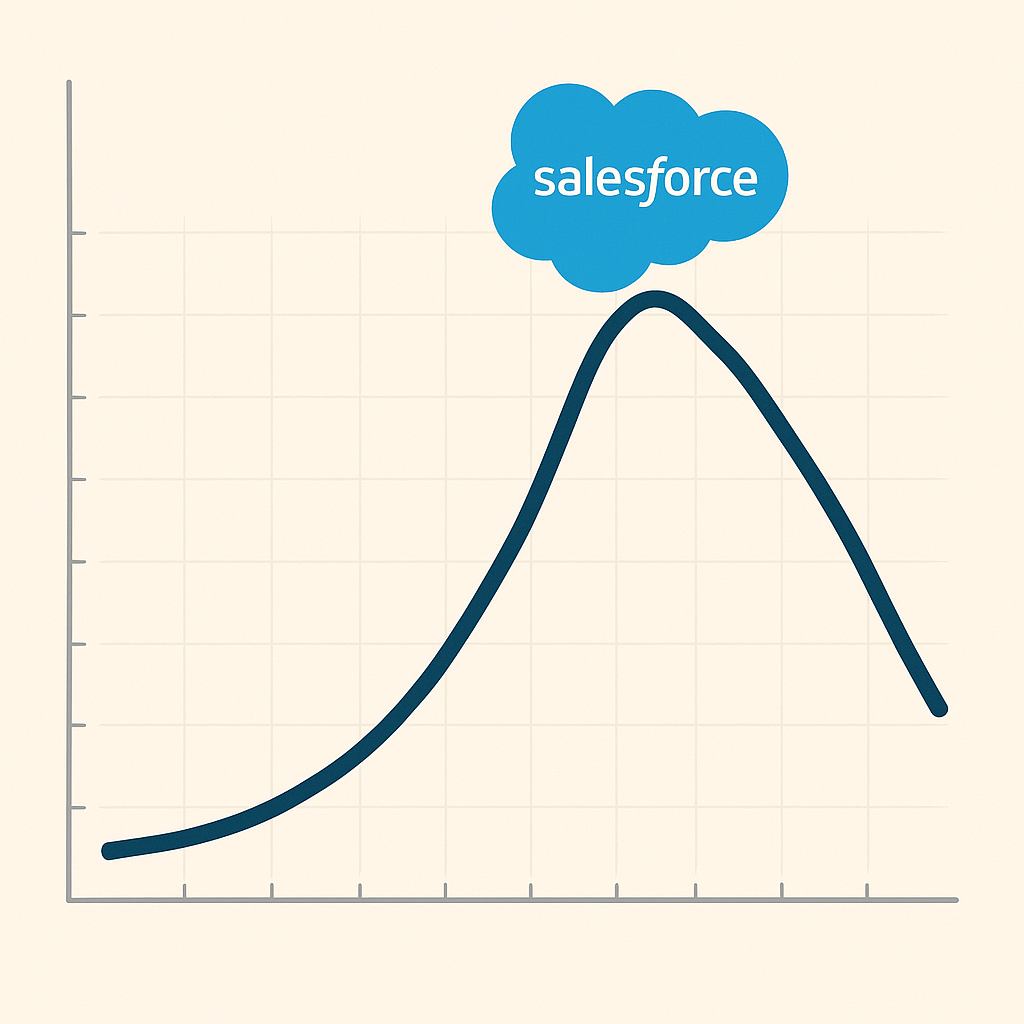
Salesforce has been the king of customer relationship management for years. But recently, many are wondering if its cultural and enterprise dominance has peaked.

New AI tools like ChatGPT make it easier for companies to build their own lightweight solutions quickly. In fact, Salesforce’s big selling point – that you don’t need to write code – is less special now.

Why? Because AI can write code for you. As one Salesforce expert noted, ā€œthe skillset of writing code is no longer a limiting factor. You can buy that skill for $20/month from Claude or other AI modelsā€.

In other words, a small team with an AI assistant can potentially create custom tools without a huge platform like Salesforce. 

There are also signs within Salesforce’s own results that growth is slowing. Salesforce’s CFO recently said they expect only 7–8% sales growth next year – the slowest ever for the company.

This hints that Salesforce’s rapid expansion days might be over.

Taken together, the rise of easy AI alternatives and Salesforce’s cooling growth suggest that the company may have hit its peak in influence.


Salesforce’s AI Gamble: Hype vs. User Sentiment

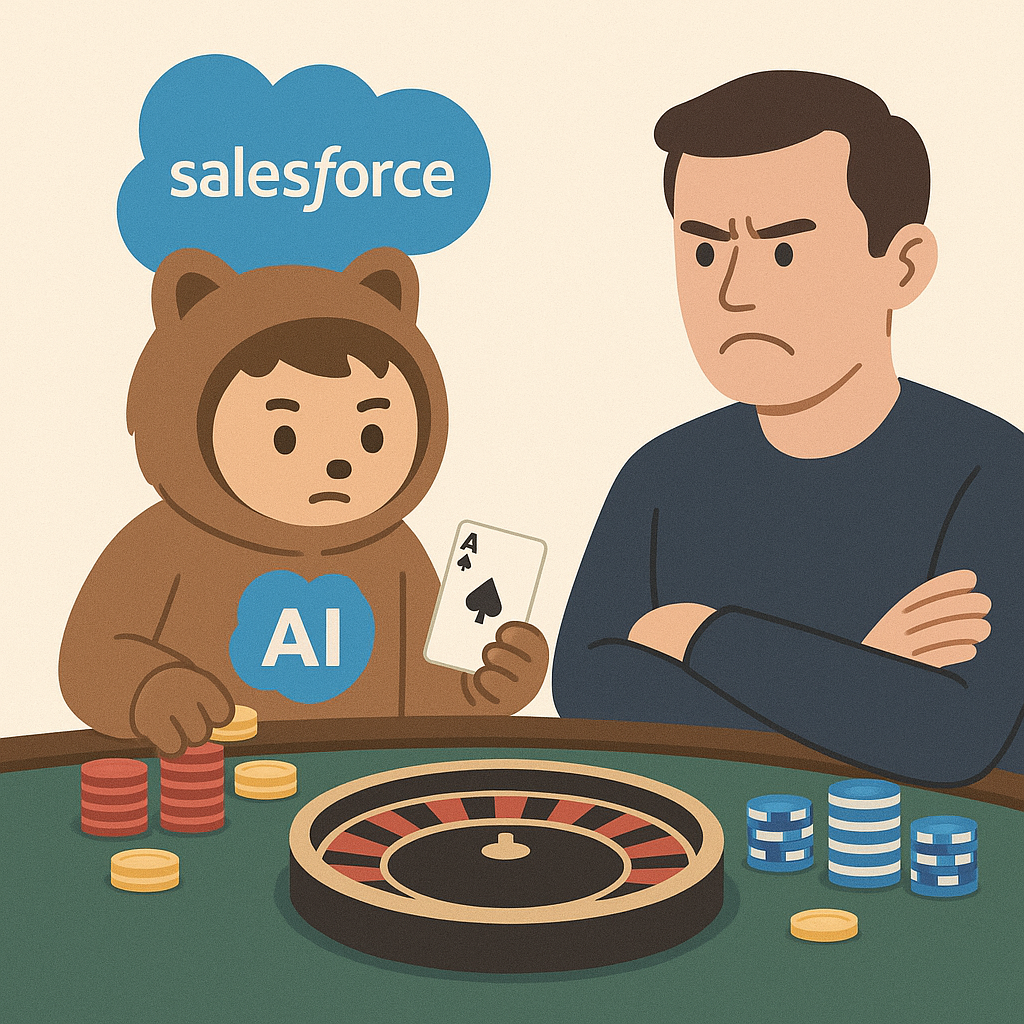
Salesforce is trying hard to ride the AI wave. They introduced Agentforce, a suite of AI features (like Einstein GPT and AI ā€œagentsā€) meant to automate tasks. The marketing hype has been huge – CEO Marc Benioff even called 2025 the ā€œabsolute year of Agentforceā€.

But so far, users aren’t impressed and adoption is slow. Salesforce boasted that about 5,000 companies have signed up for Agentforce, but many of those are just testing or got it bundled ā€œfor freeā€.

Even Salesforce’s own finance chief admitted sales of Agentforce will be modest. No surprise, then, that Agentforce is proving a hard sell in the real world.

Early users say the product isn’t living up to the hype. One veteran Salesforce technical expert found Agentforce ā€œfelt a bit early – immature, even,ā€ with not many standard functions available.

People have to build a lot of groundwork before the AI can do anything useful with their data. In online forums, some admins and developers complain that ā€œAgentforce is painfully slow and requires so much spoon-feeding… it’s not even worth the dev timeā€.

Many demo sessions have been buggy, and folks are frustrated that it takes weeks or months of setup and training to get an agent working, despite Salesforce claiming you can spin one up in 30 minutes. As one Reddit user bluntly put it, ā€œWe have tried and keep bouncing off it. It’s terribly underwhelming.ā€

Bottom line: Salesforce’s AI features haven’t wowed users yet. The ideas are exciting, but in practice Agentforce seems half-baked and not ready for prime time. This slow start is contributing to the sense that Salesforce’s dominance is no longer a sure thing.


Big Companies vs. Small Companies: Who Sticks with Salesforce?

If Salesforce is losing some luster, does that mean everyone will leave?

Not exactly.

Big enterprises have invested heavily in Salesforce over many years. They have thousands of users trained on it, massive amounts of data stored, and many processes built around the platform. These organizations won’t abandon it overnight – there’s a lot of inertia.

For better or worse, large companies often stick with what’s already deeply integrated. It’s the ā€œnobody gets fired for buying Salesforceā€ effect. Inertia and high switching costs mean Salesforce will remain the default choice for many large enterprises, even if it’s not as ā€œcoolā€ as it once was.

However, smaller businesses may skip Salesforce altogether. For a small or growing company in 2025, Salesforce can feel like a heavy, expensive solution. There are leaner options now – or they might piece together their own tools using AI. Cost is a big factor: many small business owners wonder if Salesforce is worth it ā€œespecially when they see the priceā€.

In fact, plenty of affordable CRM alternatives (like HubSpot, Zoho, or Freshsales) provide enough features without the bloat. As one analysis noted, ā€œmany small businesses find that simpler, more affordable alternatives deliver sufficient functionality without the overheadā€.

For a 10-person company, using a $25/user/month CRM (or even just Google Sheets plus some AI) might seem more sensible than buying into Salesforce. They can always upgrade later if needed. So while big corporations will keep Salesforce as a staple, smaller firms may never hop on the Salesforce train to begin with.


The Lindy Effect: Why Salesforce Isn’t Disappearing Anytime Soon

With all this talk of peaks and slowdowns, let’s be clear on one thing: Salesforce is not going away overnight.

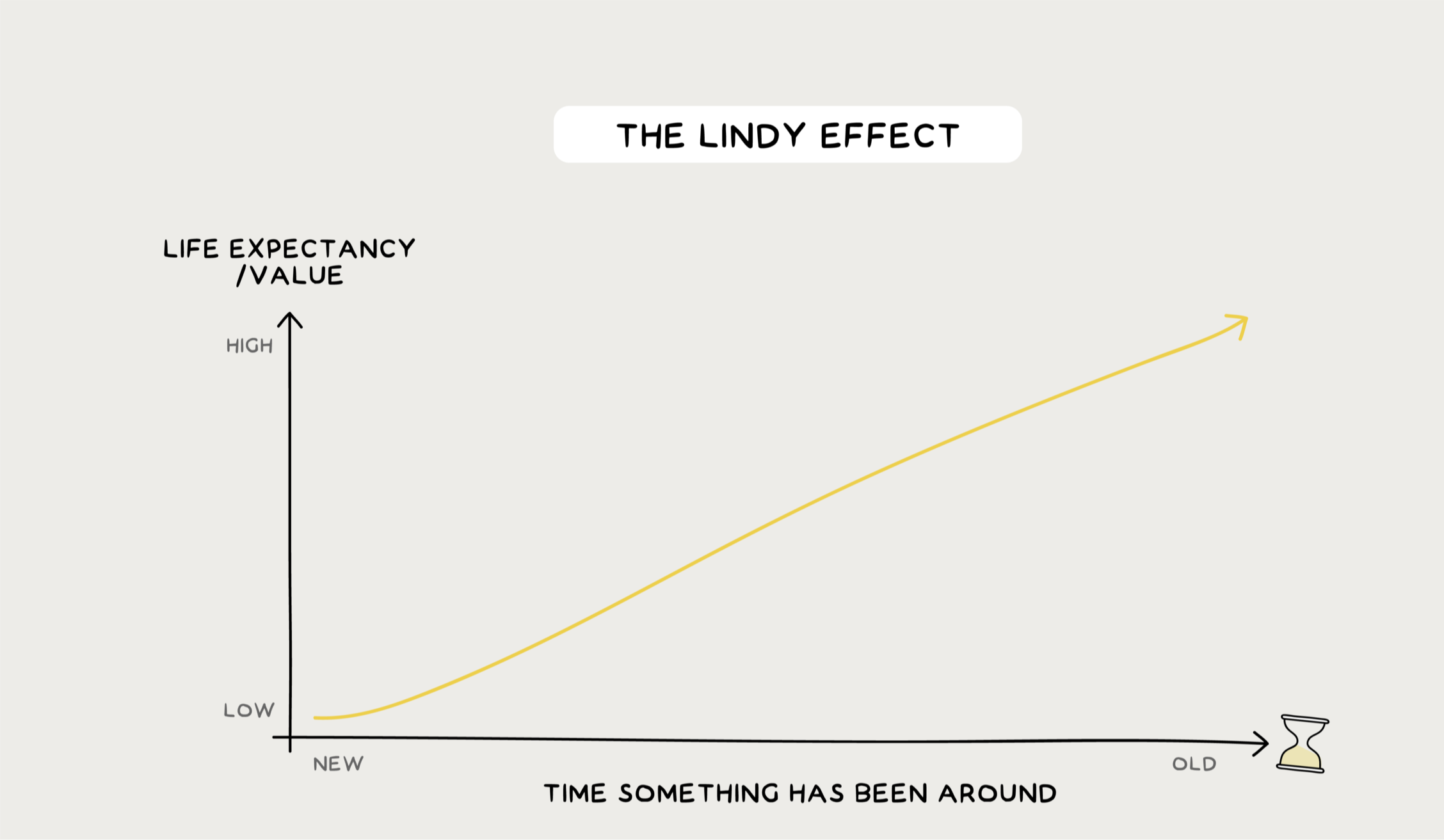
In fact, there’s a concept called the Lindy Effect which says that the longer something has lasted, the longer it’s likely to continue lasting.

Salesforce has been around for over two decades and built a huge ecosystem. That longevity itself is a sign of resilience. Think about it: lots of tech trends come and go, but something that’s deeply embedded in how businesses operate (like Salesforce) tends to stick around.

It might not grow as explosively anymore, but it’s also not likely to suddenly die off. Salesforce has millions of users and a vast network of partners and third-party apps.

According to an IDC study, the Salesforce ecosystem is still on track to create millions of new jobs by 2026 and partners will make ~$6 for every $1 Salesforce makes. That’s huge. It means there’s a massive community and economy built around Salesforce, which gives it staying power.

Moreover, big companies trust Salesforce for critical data and processes – trust that’s been earned over 20+ years. That trust and integration into business workflows won’t vanish easily (this isn’t the next Myspace or Friendster).

By the Lindy Effect logic, Salesforce could very well be supporting enterprises for decades to come, even if its cultural hype has leveled off. So yes, growth may have plateaued, but Salesforce will likely survive and remain a key player in corporate IT.

It’s more like a utility now – maybe not exciting, but reliable.


Practical Takeaways for Salesforce Professionals

What does all this mean for people building their careers in the Salesforce ecosystem? Here are some key takeaways:

  • Never Stop Learning: The Salesforce world changes fast. New features, AI tools, and best practices keep emerging. To stay relevant, commit to continuous learning. As the Red Queen Effect suggests, you must keep upskilling just to stand still. Block out time each week for Trailhead modules, release notes, or experimenting with new features.

  • Embrace AI as a Tool: Don’t fear that AI like ChatGPT will replace you – instead, use it to boost your productivity. For example, you can have AI help write Apex code or generate a Lightning Web Component in minutes. In Salesforce, try out Einstein GPT, Copilot, or other AI features in a sandbox. The more you can partner with AI to deliver results, the more valuable you become. As one guide put it, get familiar now so you’re ready when someone asks: ā€œHow can we use AI in Salesforce?ā€.

  • Focus on Data Quality and Fundamentals: Fancy AI or automation won’t help if your underlying data and processes are a mess. Many companies learned that ā€œbad data in, bad results outā€ with AI. So, take the initiative to clean up data, document processes, and improve org health. Master the fundamentals (security, data modeling, flow building). This not only prepares your org for AI, but also makes you the go-to problem solver.

  • Broaden and Deepen Your Skills: The most resilient Salesforce professionals have T-shaped skills ā€“ a broad understanding of the platform plus deep expertise in one or two areas. For instance, know a bit of admin, dev, and reporting, but be really skilled in a niche like CPQ, Flow Orchestration, or Marketing Cloud. This versatility means you can add value in many situations, while your specialty makes you stand out for specific high-demand projects.

  • Plan for a Long (But Steady) Career: Salesforce isn’t disappearing, but its wild growth is leveling off. This means opportunities will still be there, just more stable. So think long-term. Continue investing in your Salesforce career, but stay adaptable. If you work with smaller clients, it might help to familiarize yourself with one of the popular Salesforce alternatives too, so you can advise objectively (e.g. know the basics of HubSpot or Zoho). Above all, focus on providing business value, not just technical know-how. Salesforce will likely be around for decades (the Lindy Effect in action), so the skills you build now can pay off for years – as long as you keep them fresh and aligned with what companies need.

In conclusion, Salesforce may have reached a peak in its cultural hype, but with the right approach, you can build a thriving career in its ecosystem for the foreseeable future. Stay curious, stay adaptable, and you’ll navigate this changing landscape just fine.


Happy learning!


Best,

Nick